
Upholdings: designing and coding a minimal Webflow site in one pass
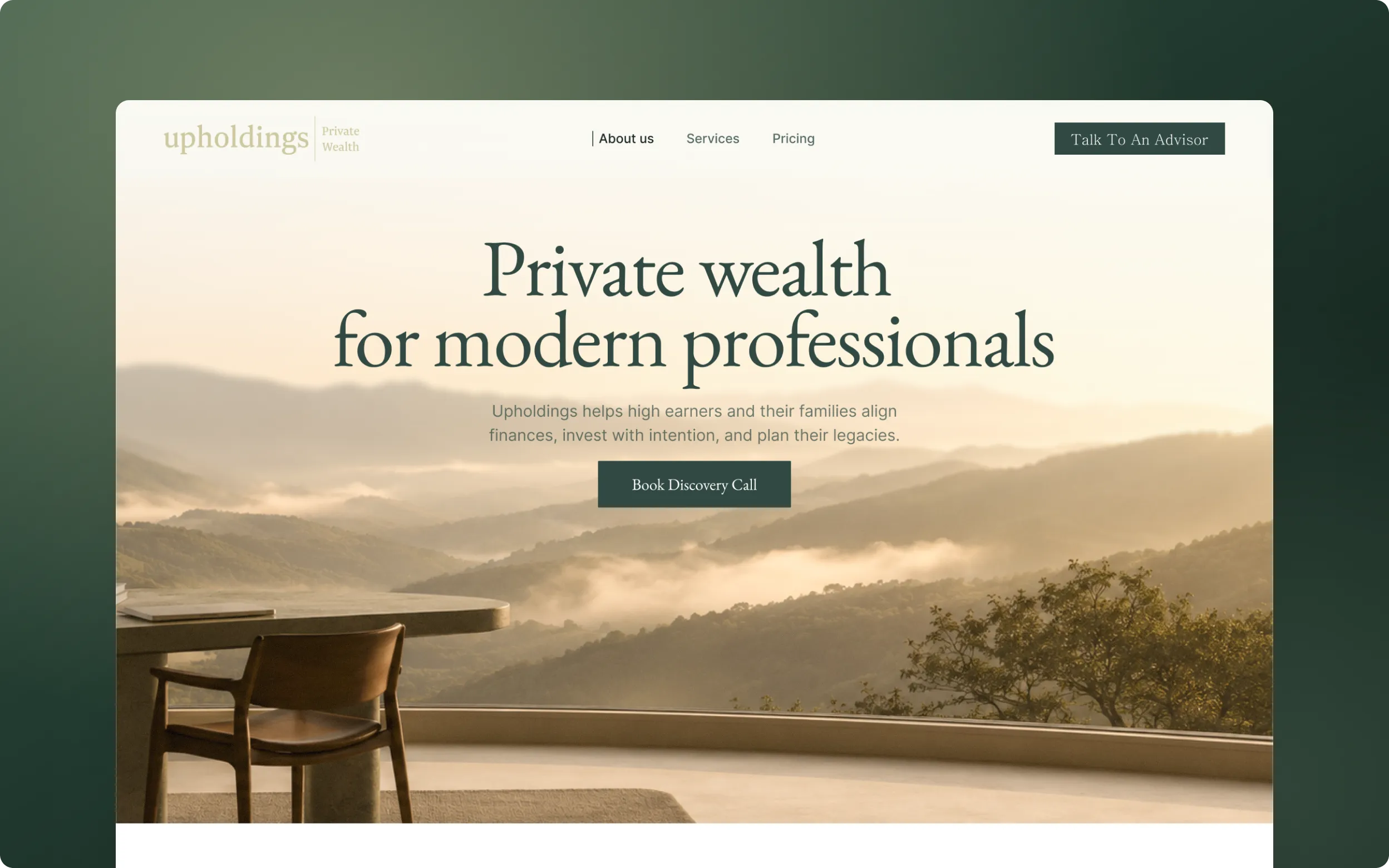
About the project
Upholdings is a private wealth firm that helps high earners and their families align finances, invest with intention and plan their legacies. The brief was a site that reflects its premium positioning and works as a foundation for its online presence and marketing. Roman Savchuk did both the design and the build, so structure, hierarchy and markup were decided together.
Key Takeaways
- One person, design and build. Structure, hierarchy and markup were decided together, with no handover between design and code.
- Reusable components. The client edits content safely, and the site stays consistent as it grows.
- SEO in the first build. Semantic HTML, heading structure, metadata and image optimization were there from day one.
- Light integrations. Plausible and Calendly were added as light integrations, imagery is AI-generated and motion is subtle.
Why designing and building together helps
When one person owns both, the questions that usually travel between a designer and a developer disappear. I could design a layout knowing how it would be built, and build it knowing why it was designed that way. For a minimal site, where every element has to carry weight, that continuity is the whole point.
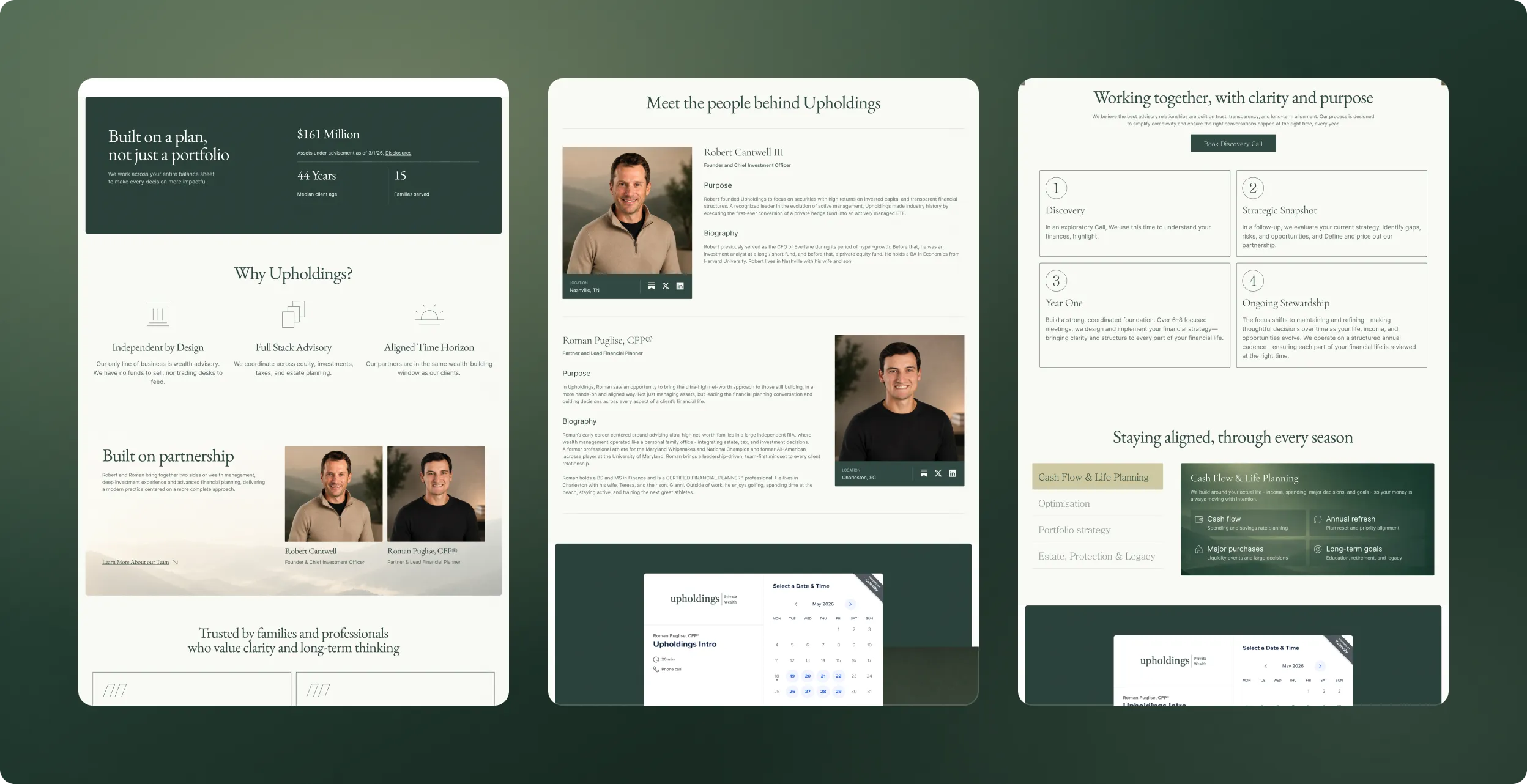
Hierarchy first
I started from information hierarchy: what the visitor needs to understand first, second and third. The layouts followed from that, which also gave me the heading structure for free, because the page order and the document order are the same thing.
Responsive layouts from reusable components
In Webflow I built the responsive layouts from reusable components, defined once per pattern. A change in a component reaches every use of it, and the client edits content without touching the structure.
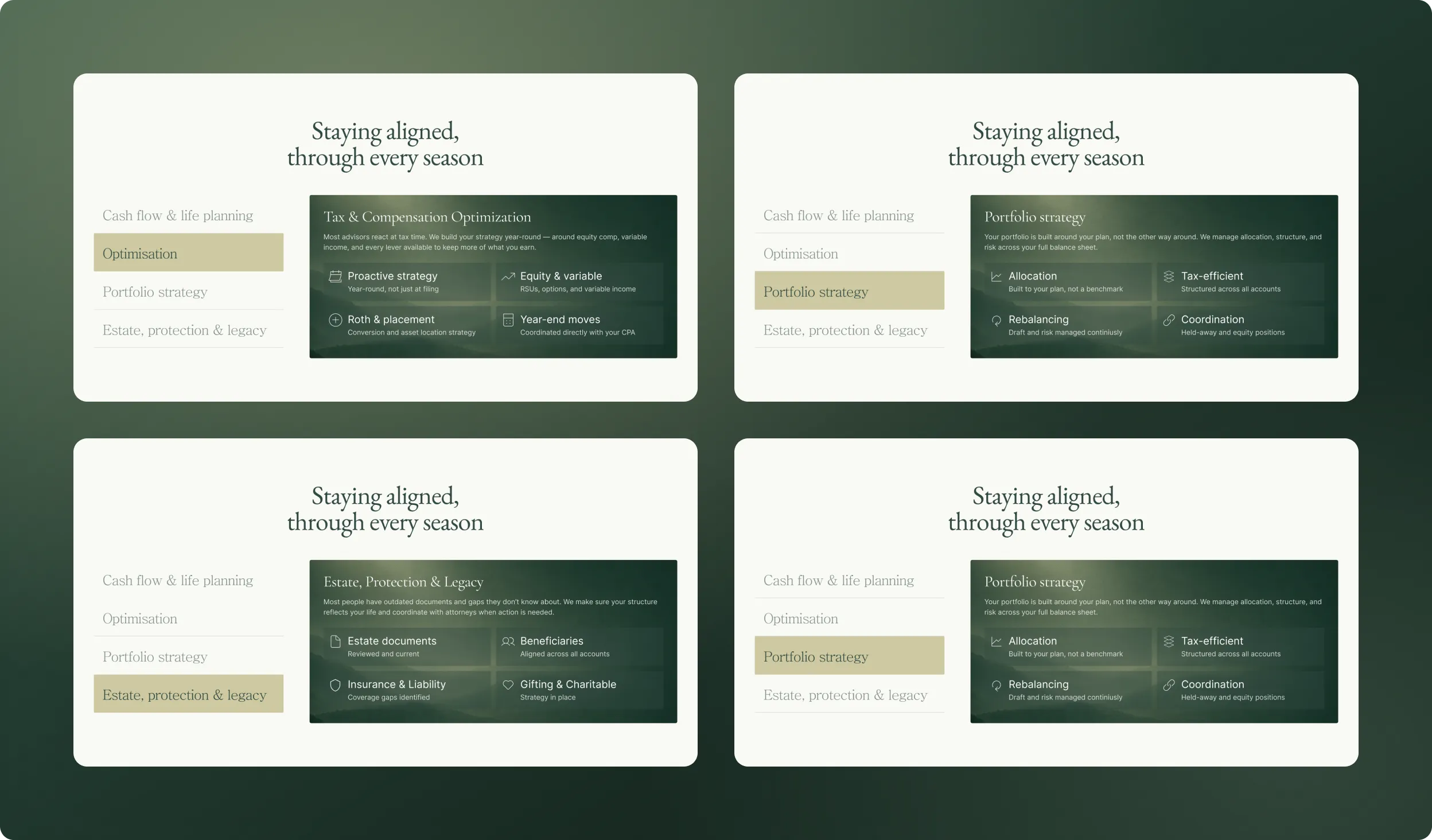
Images and animation
Images are AI-generated and optimized for the web, and animation is subtle. A minimal layout leaves nowhere for a heavy effect to hide, so I kept both light.

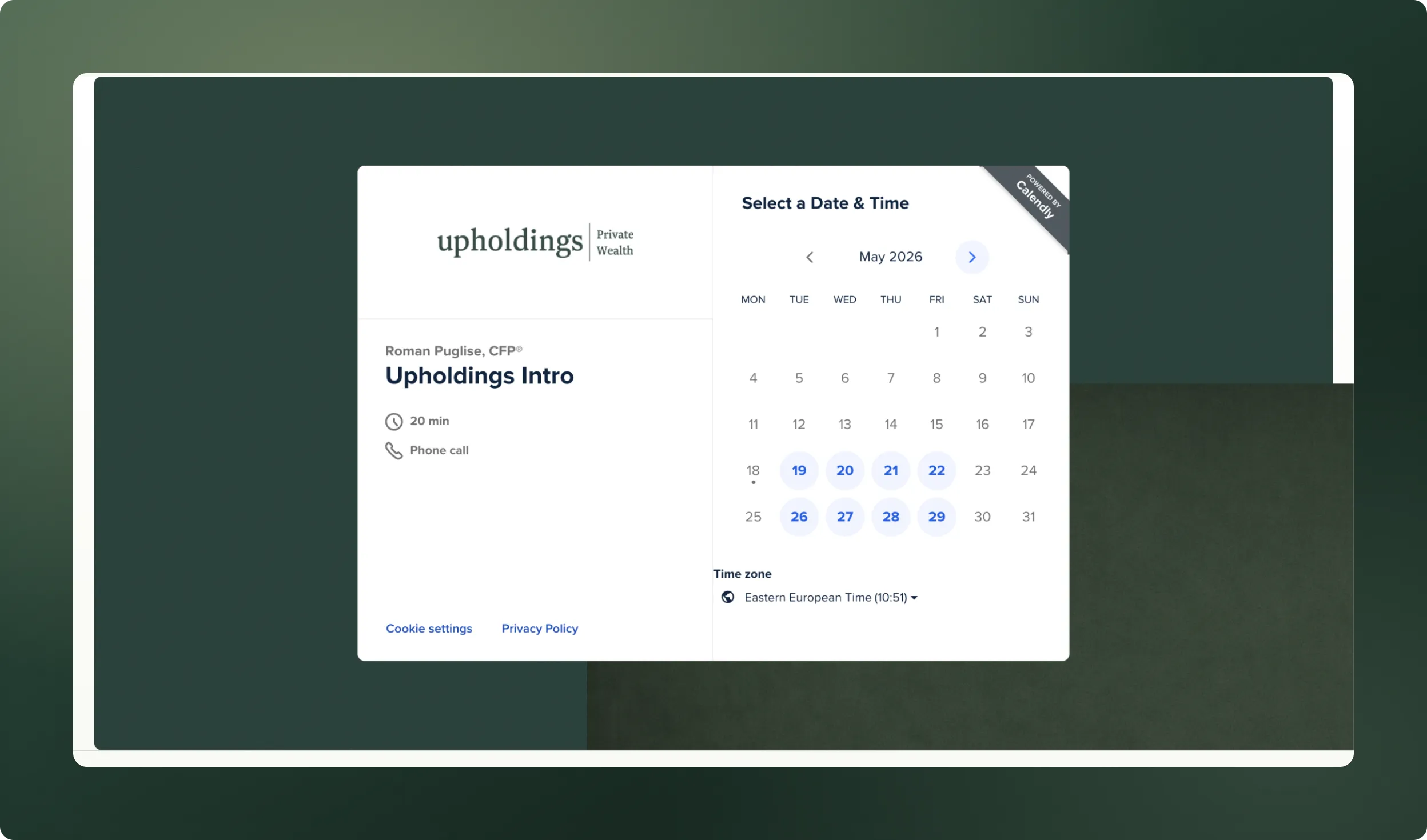
Plausible and Calendly
Plausible runs analytics and Calendly handles scheduling. Neither alters the page structure, and I added them in a way that keeps loading fast.
SEO in the markup
The markup follows the hierarchy: semantic elements, a logical heading order, metadata and optimized images, on clean code. Since the hierarchy came first, the markup mostly records decisions already made.
Outcome
The site is clean, responsive and fast, and it leaves the team room to grow. Robert Cantwell III described Roman Savchuk’s work as a “rare combination of design and development talent” and “structured and predictable”.
Roman has the rare combination of design and development talent. He works in a structured and predictable fashion. He was easy to communicate with at every step. He earns my highest recommendation.

FREQUENTLY ASKED QUESTIONS
01What does it change when the same person designs and builds a site?

Fewer handovers: the design is made with the build in mind, and the build follows the design intent.
02How do you get a clean heading structure in Webflow?
Design the information hierarchy first, then let the page order and the document order follow it.
03Why use reusable components on a small site?
One definition per pattern keeps the site consistent and keeps the client’s edits away from the structure.
04How do you add analytics and scheduling to Webflow without slowing it?
Use light tools, here Plausible and Calendly, and add them without changing the page structure.
05What goes into SEO at the markup level?
Semantic HTML, heading order, metadata and optimized images, written into the first build.