
PXP: a GSAP story page for a product with 20+ modules
About the project
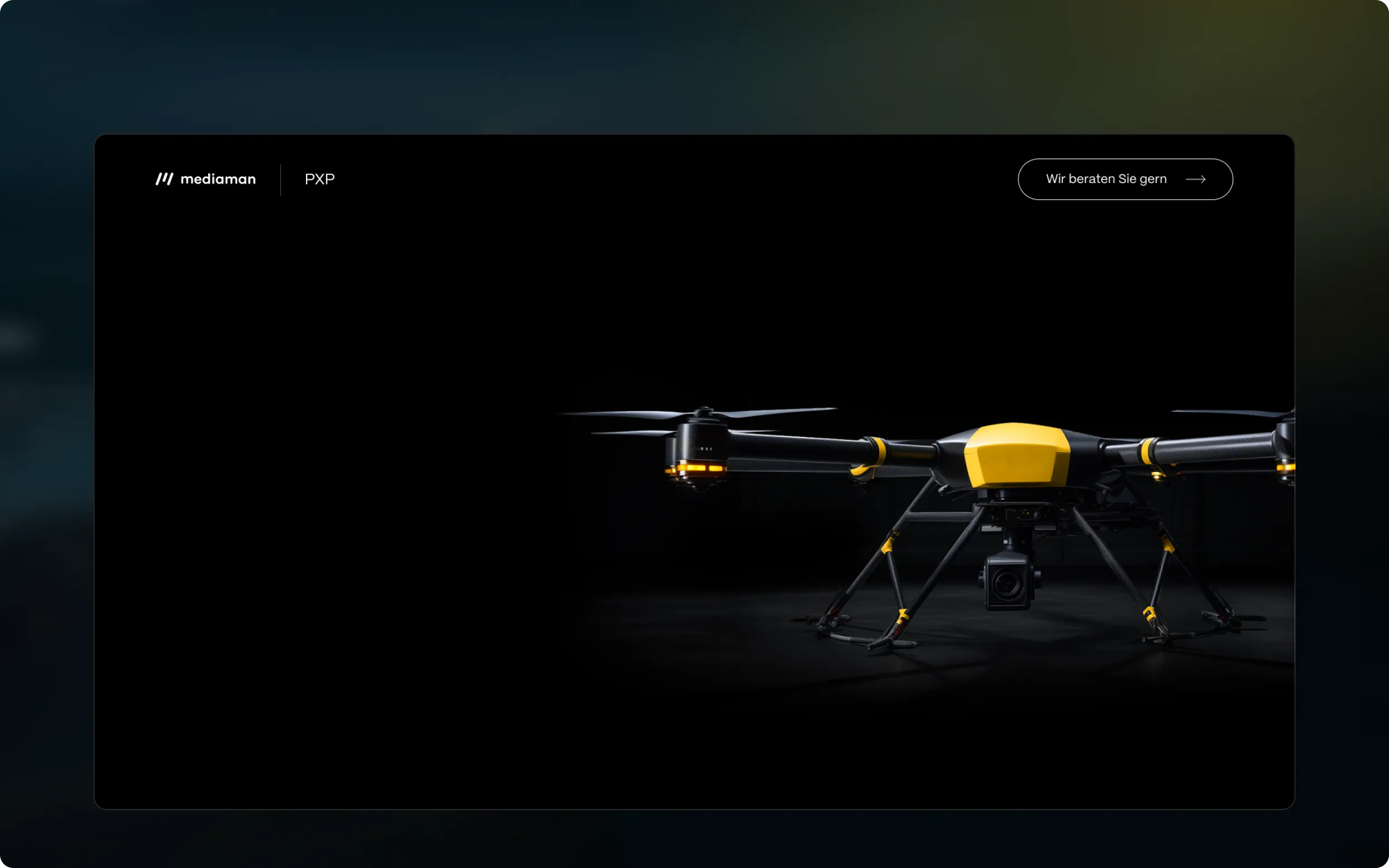
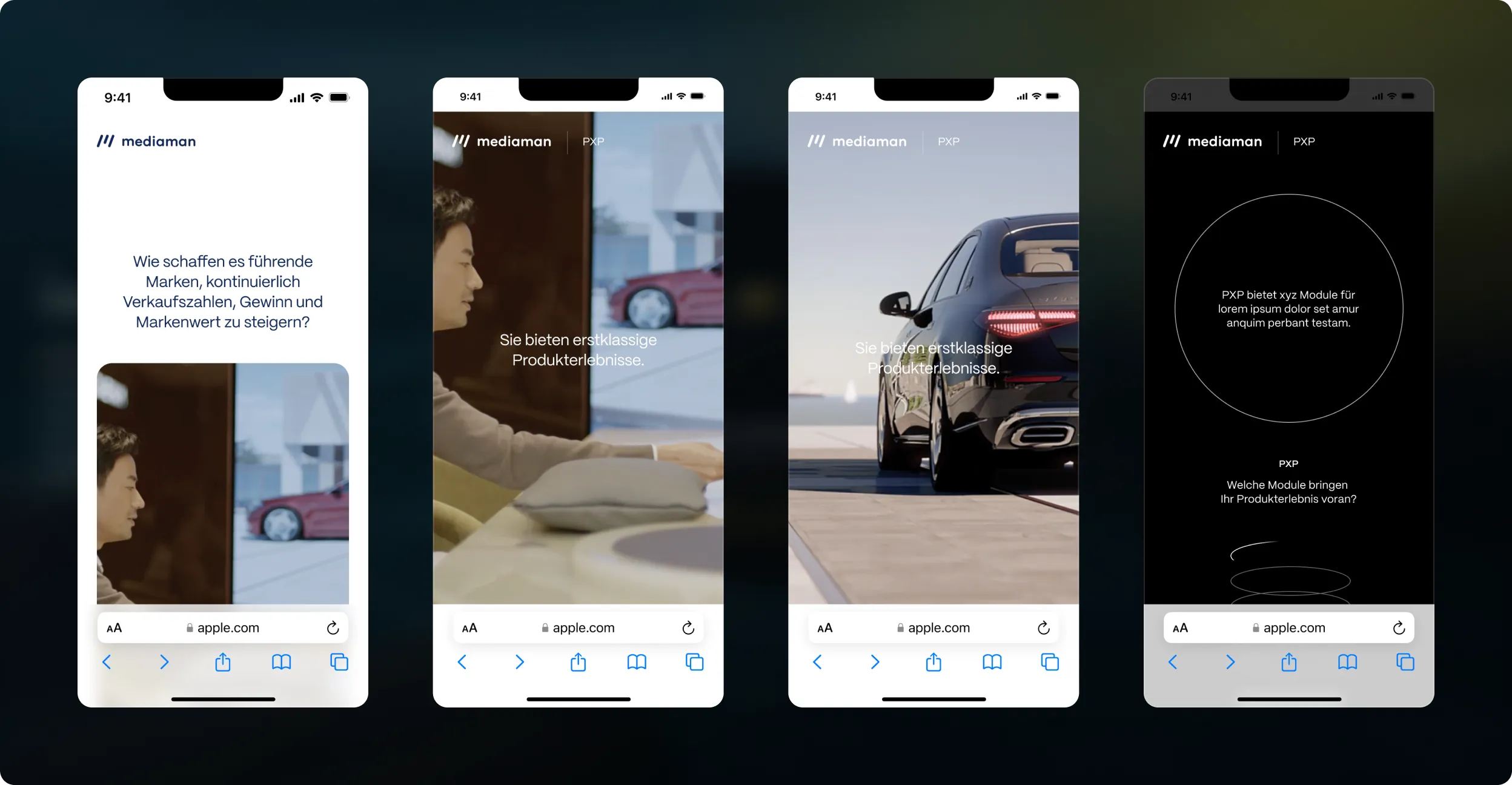
mediaman is an agency that makes marketing and unique experiences, 3D models among them, for large corporations. It asked for a standalone page for its Product Experience Platform, PXP, aimed at a narrow audience of brand and product managers. Roman Savchuk built it as a long, GSAP-driven scroll story where motion carries the meaning.
Key Takeaways
- Every lead matters. A standalone page for a narrow audience, so it had to leave a strong impression.
- A long scroll narrative. Complex animation built on GSAP, telling the story section by section.
- Consistency over effects. The hard part was keeping many animated sections consistent with each other.
- Readable for machines. The page reads as a story and stays understandable to search engines and AI assistants.
The task from a developer’s seat
mediaman is an agency that makes marketing and unique experiences, 3D models among them, for large corporations. It asked for a page for its Product Experience Platform, PXP, separate from its main site. The audience is narrow: brand and product managers. The client has few leads, but each is important, so the page was meant to leave a strong impression. For me that translated into a long, animated, narrative page where motion carries meaning.
Writing the page as a sequence
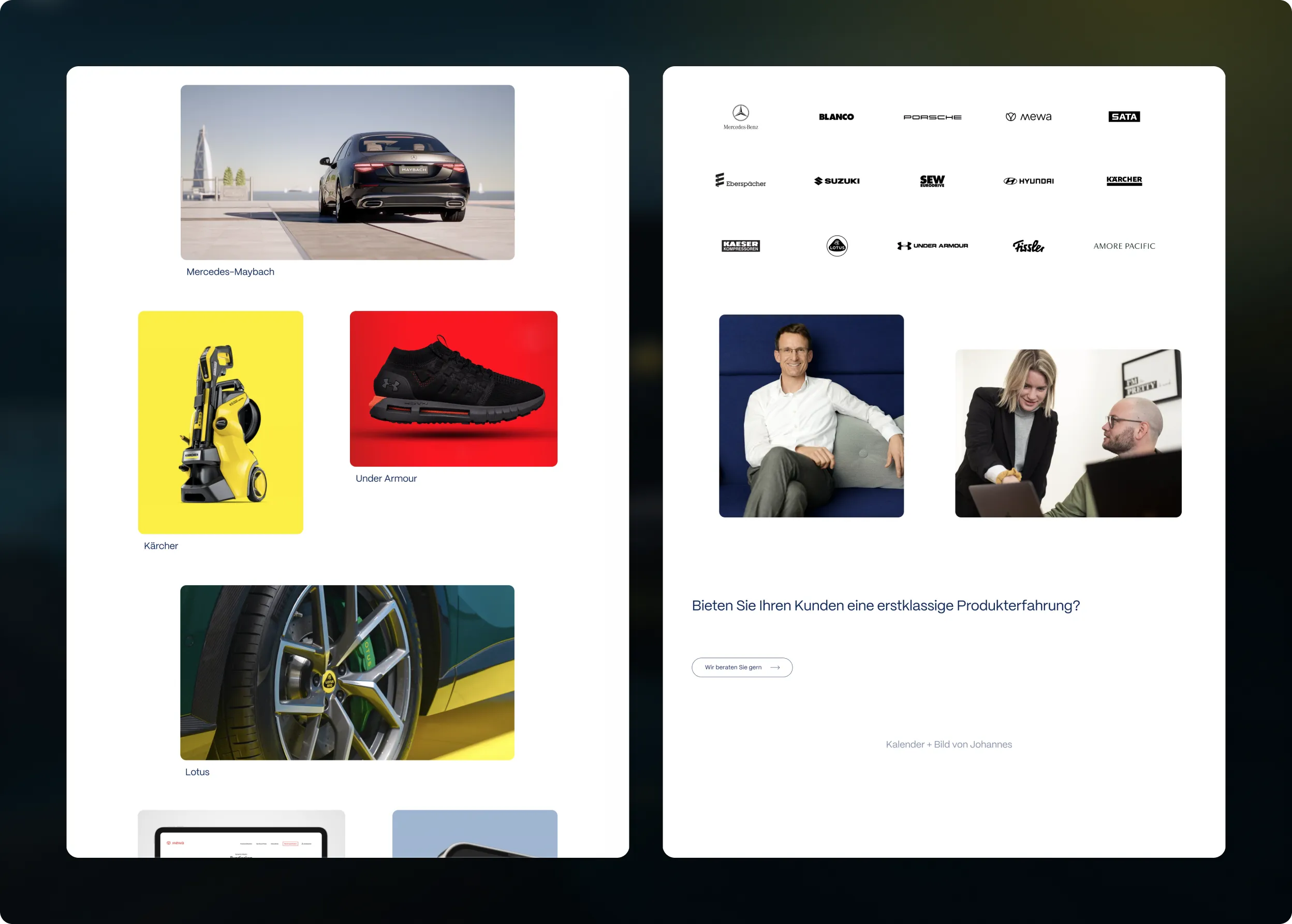
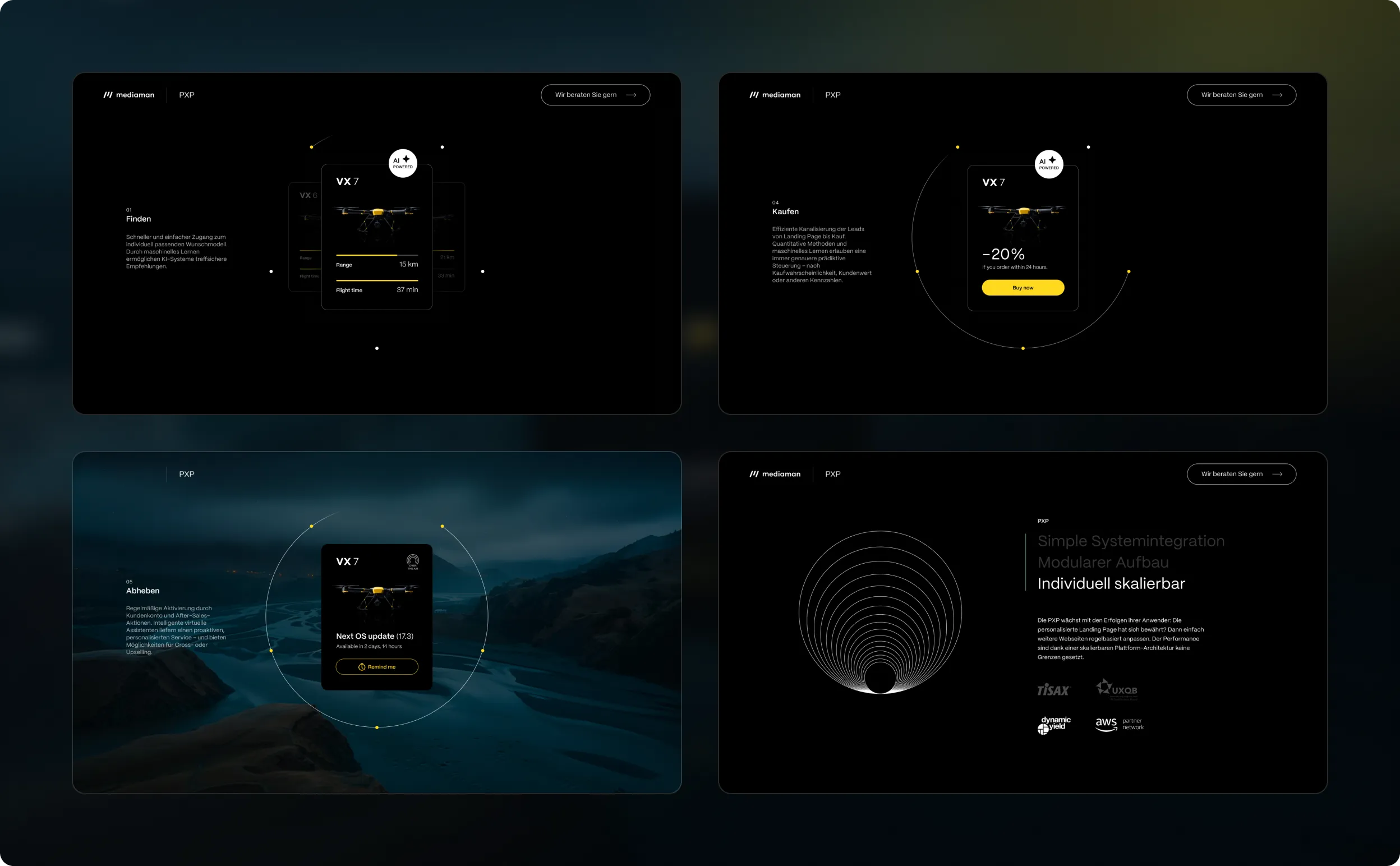
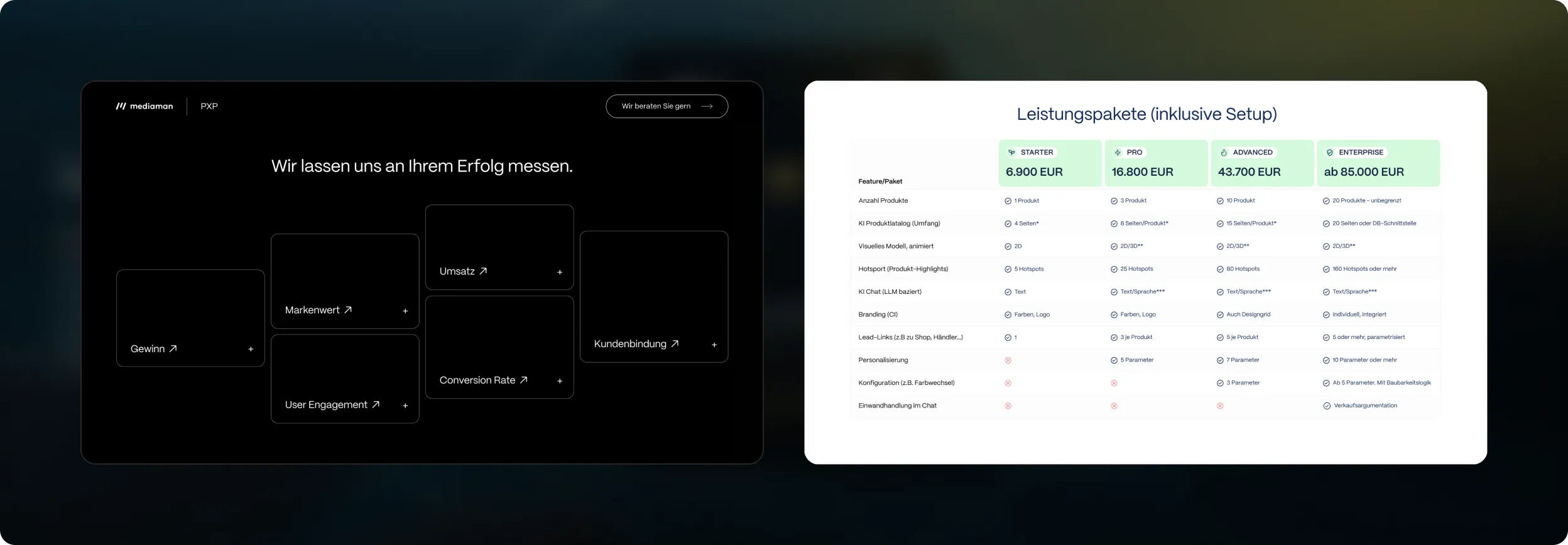
Before touching animation I treated the page as a script. The content moves from a question about growth, through client work and a five-step customer journey, to the platform’s modules and a final call to get in touch. Each section has one job in that order, and the animation is there to hand the reader from one beat to the next.
Why GSAP
I used GSAP because a story page depends on timing: what appears first, what overlaps, what waits for the scroll. GSAP lets me describe that sequencing precisely and change it without rewriting the surrounding code.
Keeping complex animation manageable
With this many animated sections, the risk is a page where every block behaves slightly differently. I kept the motion consistent by sharing the same approach to timing and movement across sections, so the page reads as one piece of work and a change to one beat does not break another.
Content underneath the motion
The animation sits on top of ordinary page content and structure. That keeps the text, headings and links available to search engines and AI assistants, even though the page presents itself as a cinematic scroll.
What I would carry into the next page
Plan the sequence first, then build the motion around it. When the story is fixed, the animation has a clear job and the implementation stays focused.
Outcome
mediaman has a long, animated narrative page for PXP that fits the weight of its few and valuable leads. Head of Sales & Marketing Johannes Schneider noted that Roman Savchuk “found ways to improve the existing design” along the way.
We had a tight deadline and required a Webflow developer to bring our design live. He not only did that but found ways to improve the existing design. Furthermore, he made it very easy for my team to update the backend with new content due to exact labeling, fine coding and even explanatory loom videos.

FREQUENTLY ASKED QUESTIONS
01How do you plan a long scroll-driven page?

Write it as a script first, with one job per section, and design the motion to move the reader between those beats.
02Why choose GSAP for story-driven animation?
It handles sequencing and timing precisely, which matters when many elements have to move in a planned order.
03How do you keep many animated sections consistent?
Use one shared approach to timing and movement across the page, so sections feel related and edits stay local.
04How do you keep an animated page readable for search engines?
Keep headings, text and links as normal page content beneath the animation layer.
05What is the biggest risk in an animation-heavy build?
A page that impresses in pieces but feels uneven as a whole. Consistency across sections matters more than any single effect.