
Navina.ai: a technical SEO foundation on a component-based Webflow CMS
About the project
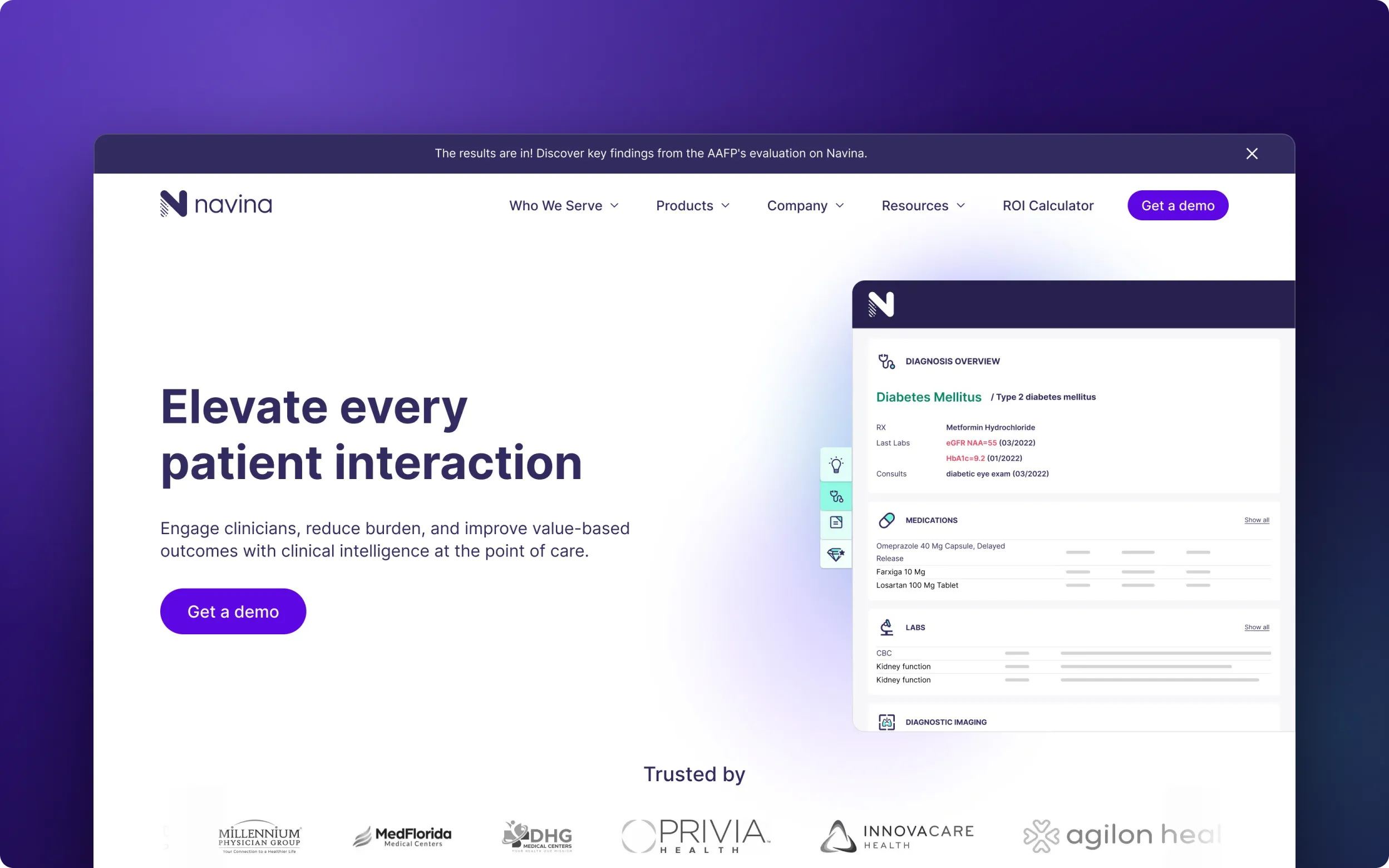
Navina.ai is a heavily marketed website with frequent updates and a lot of complex CMS content. The company invests heavily in SEO, so every new page needs a solid technical base from the moment it is published, regardless of who creates it.
Key Takeaways
- Technical SEO by design. Technical SEO was built into the architecture, not added afterward.
- Six CMS collections. One resource hub runs on six CMS collections, each with two template variations.
- Built for marketing tools. Many integrations, A/B tests and a deep HubSpot integration; PageSpeed went from about 20 to 70+.
- Clean component system. A design system and reusable components keep the code clean across constant changes.
- The result. Faster load times, more organic traffic and new leads.
CMS architecture
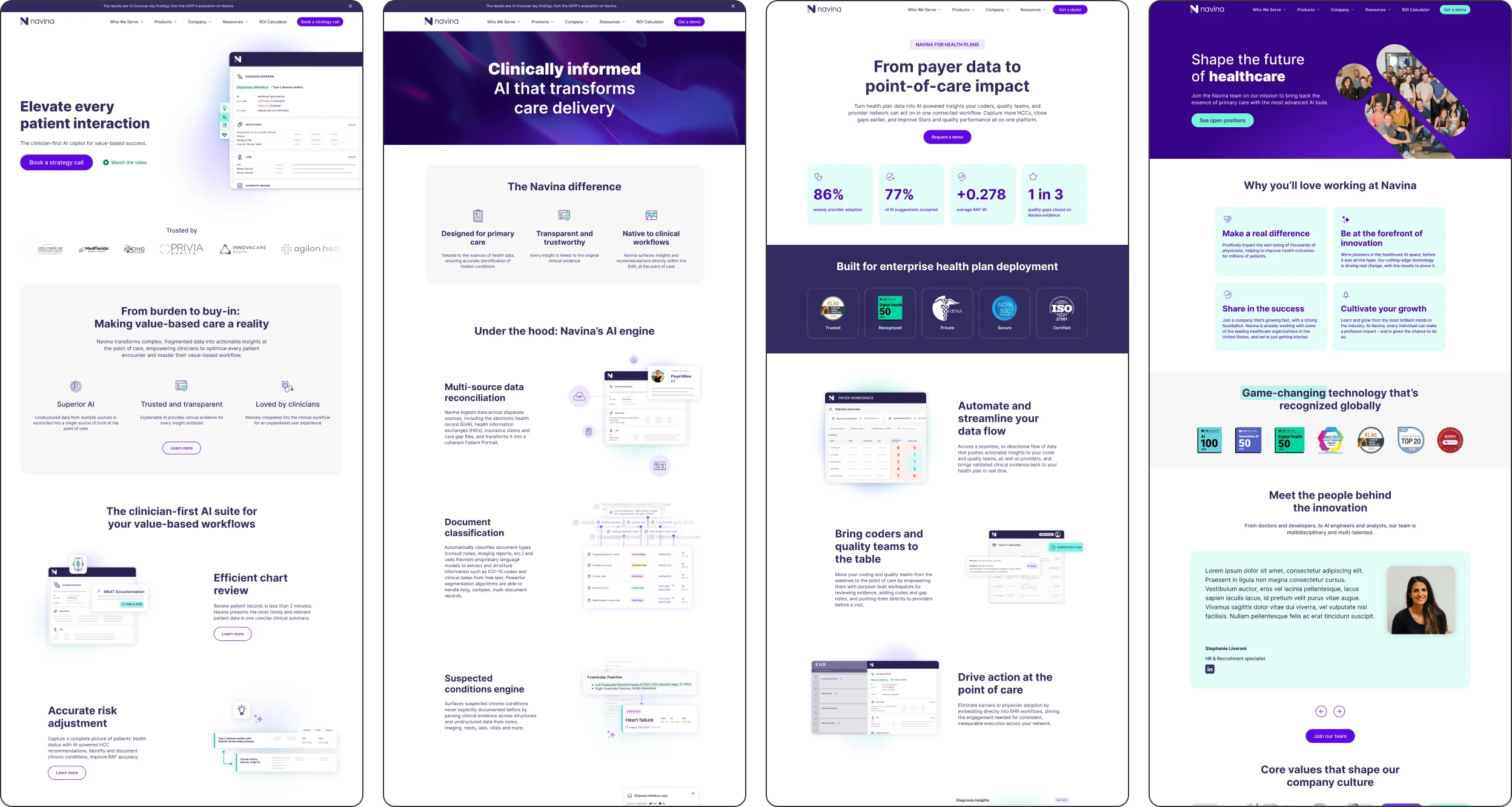
The resource hub is the most demanding part of the build. It combines six CMS collections, and I made two customized template variations for each. The layouts are driven by CMS fields, so editors fill in fields and the structure, headings and markup stay consistent. HubSpot forms are tailored per collection, and Finsweet and custom JS handle the functionality that native Webflow doesn't cover.

Component system
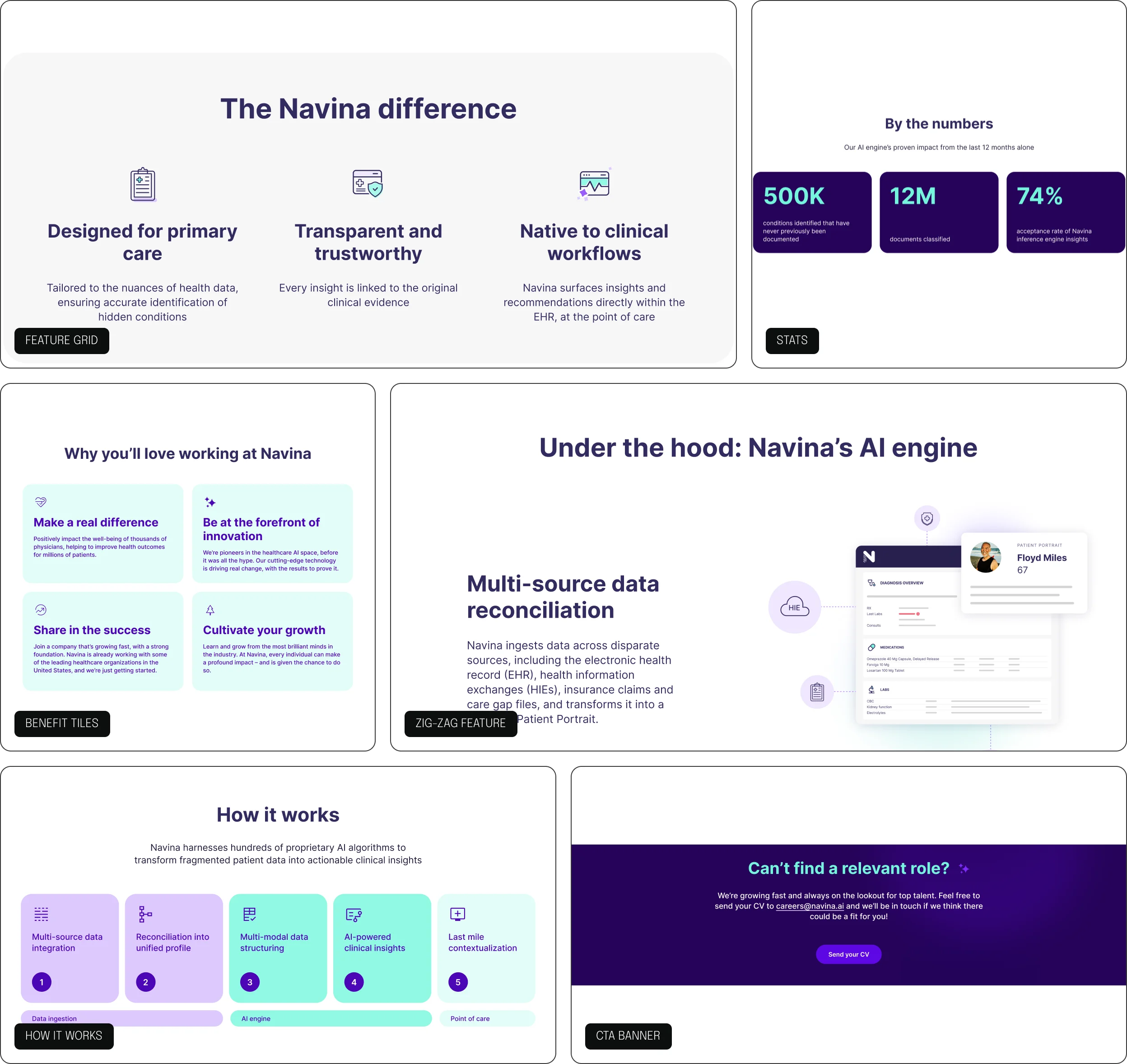
Every page is assembled from reusable components documented in a detailed design system. This keeps the markup clean and predictable, which matters for crawlability and for maintenance. A new typical page reuses existing components, so it inherits the same technical SEO base automatically.
Technical SEO and performance
A large share of the SEO investment went into technical optimization: clean, structured code, speed optimization and well-organized CMS templates. Lottie animations add motion without heavy assets, and performance was monitored as the site grew. Because the base is shared across components, an improvement made once applies everywhere it is used.
Marketing integrations and A/B tests
The site carries a lot of marketing tooling: many third-party integrations, a deep HubSpot integration, and a steady stream of A/B tests that the marketing team runs. I built the templates and components so those scripts and experiments plug in without breaking the layout or each other. The trade-off is performance: with this many marketing scripts, I raised the PageSpeed score from about 20 to 70+, which is the practical ceiling for this setup.
Result
PageSpeed went from about 20 to 70+, new pages now go live in hours instead of days, engagement improved and organic search traffic rose noticeably, bringing in new leads. The standardized design and CMS integration make the site easier to update and scale, for a team of about a dozen non-technical editors.
Roman is a key asset to our website development team and I highly recommend his expertise in Webflow. He is able to understand complex logic and requirements, and is super knowledgeable on the platform to deliver an outstanding product. Throughout out experience Roman has been very communicative with all aspects of the website - marketing and design to ensure that dev projects are delivered in an optimal fashion and on time.

FREQUENTLY ASKED QUESTIONS
01How was the Navina.ai website built to support SEO?

Technical SEO is part of the architecture: clean structured code, speed optimization, and CMS templates that keep markup consistent on every page.
02How are the CMS collections organized?
The resource hub uses six collections, each with two customized template variations and tailored HubSpot forms.
03Why use a component-based design system in Webflow?
It keeps the code clean as the site changes, lets new pages launch fast and means each new page inherits the same technical base.
04What results did the technical work deliver?
Faster load times, higher engagement and a noticeable uptick in organic search traffic.
05How do you keep a Webflow site fast with many marketing scripts and A/B tests?
Build templates and components so scripts plug in without breaking the layout, then tune speed around them. On Navina this raised PageSpeed from about 20 to 70+.