
Mamo: ongoing Webflow development for a fintech
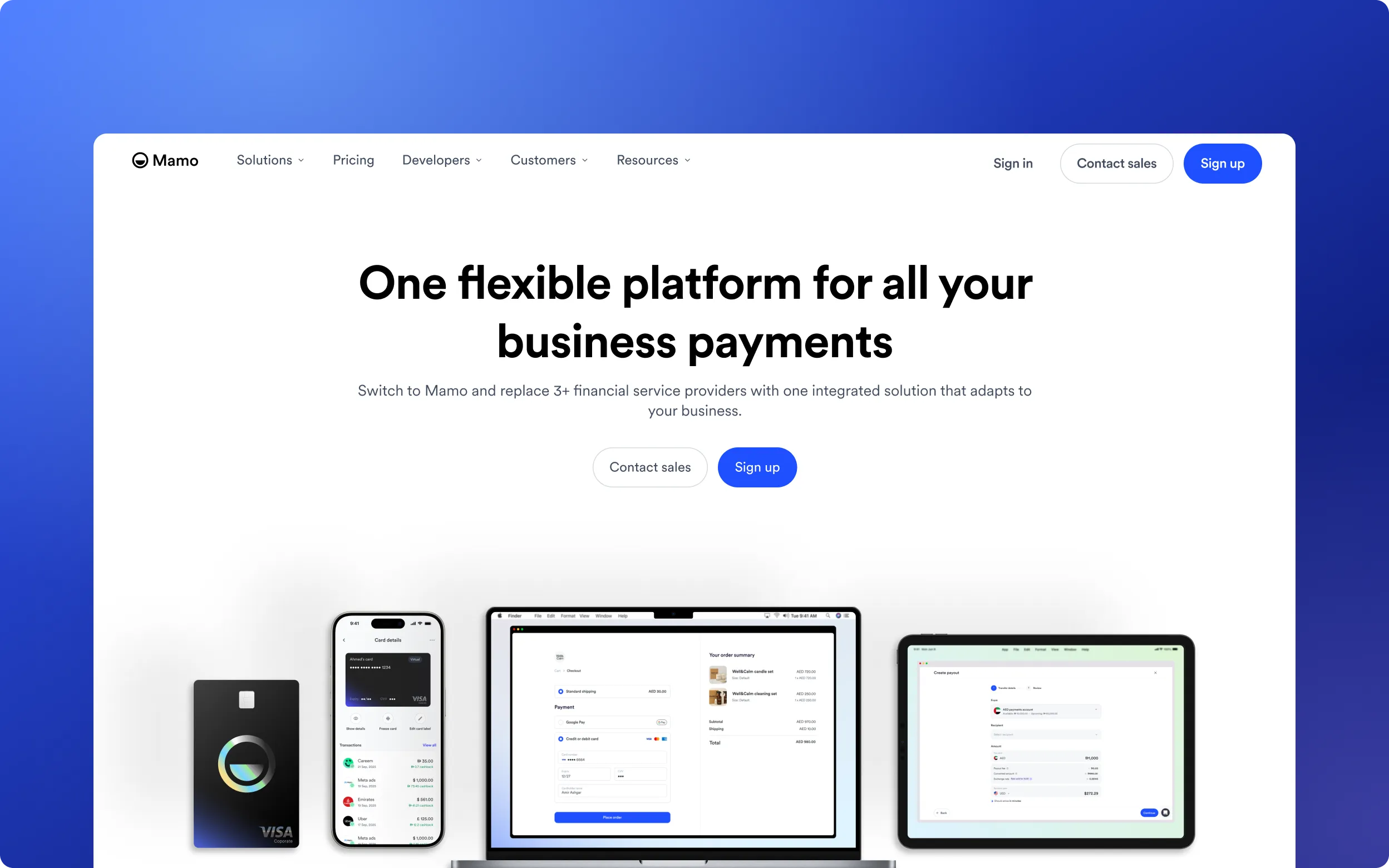
About the project
Mamo is a fintech platform that gives businesses one place for payments, corporate cards and expense management. Its product is constantly evolving, and the website has to keep up. For more than six months Roman Savchuk has been solely responsible for the end-to-end development of the site, working with marketing, design, sales and leadership.
Key Takeaways
- End-to-end ownership. One developer owns the whole website, from new pages to performance and SEO.
- Built for velocity. The product and the site change constantly, so new pages ship fast without losing quality.
- Faster than before. Site performance improved after the work started, and it stays a check on every release.
- Ideas, not only tickets. Proactive suggestions on design and interactions, SEO and technical performance.
Working at product speed
Mamo’s product is constantly evolving, and the website has to keep up. I am responsible for the end-to-end development of the site on my own, so new features, landing pages and changes reach the site without a handover between people. Speed of response and speed of execution are the main requirements of the job.
Shared sections for new pages
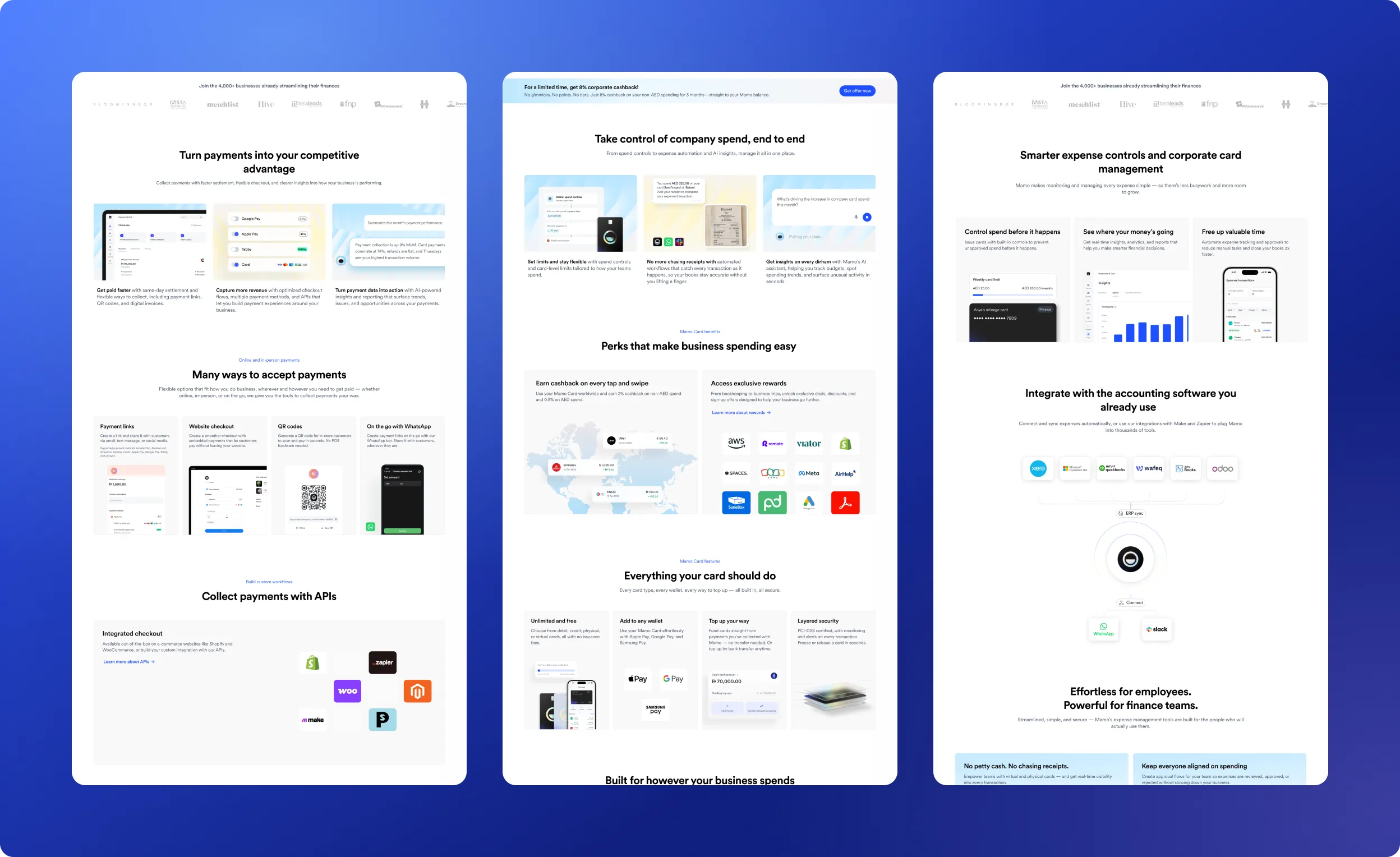
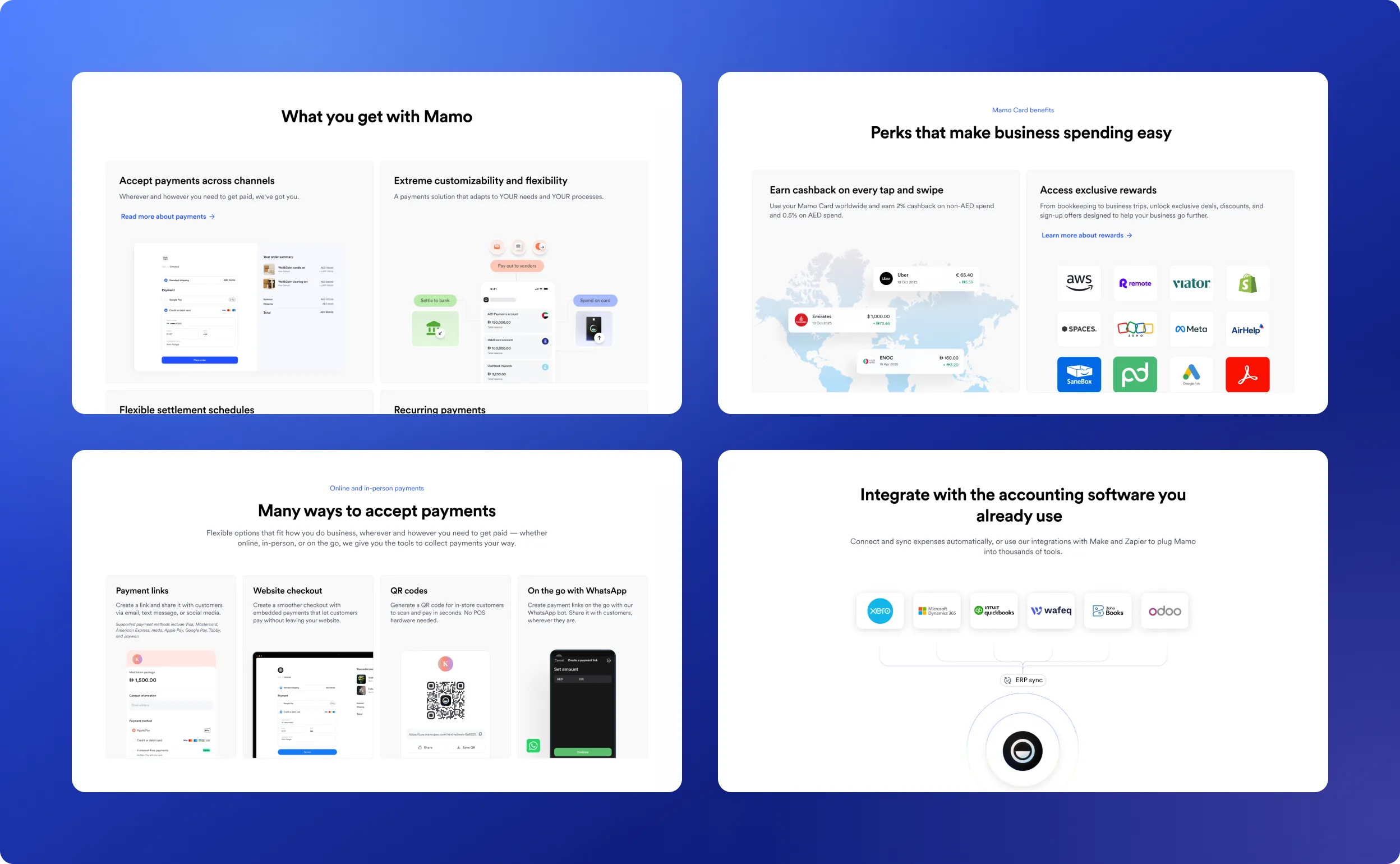
The product pages share the same kinds of blocks: a hero, feature grids, integrations, testimonials, FAQ and a call to action. Building from shared sections means a new page is mostly a new combination of existing parts, which keeps a fast release cycle from turning into design drift.
Quality at speed
Working fast does not mean cutting corners. I improved the website’s performance after joining the project and keep checking it with every change, so new sections and interactions do not slow the pages down.
SEO, indexing and sitemaps
Search visibility is part of the ongoing work: SEO on the main site, and keeping indexing and sitemaps in order across the main site and the docs and help subdomains.
Ideas on design and interactions
Beyond the tasks I get, I bring ideas on design and interactions, SEO and technical performance, so the site improves between releases and not only when a new page is requested.
Working with the whole team
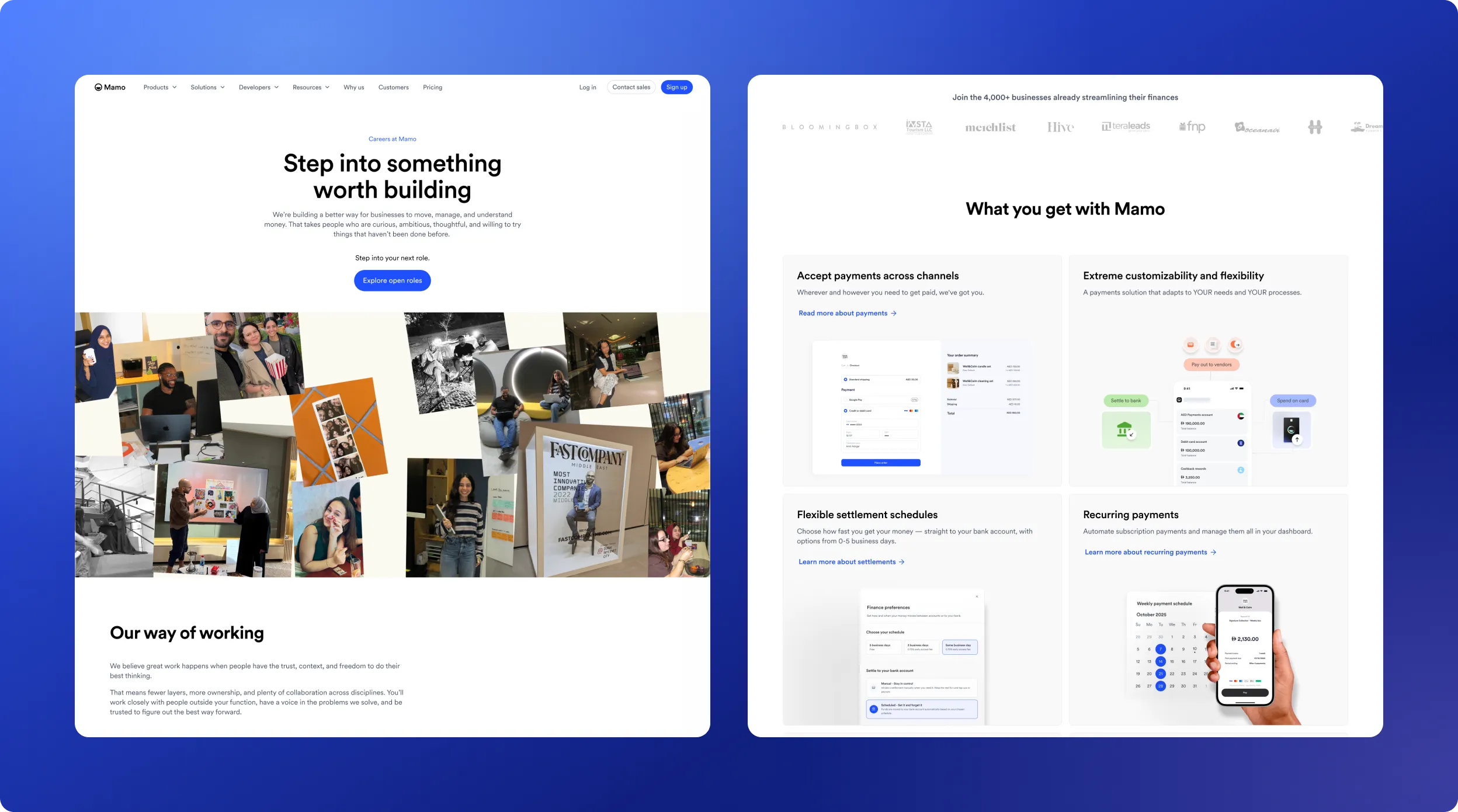
The website touches marketing, design, sales and leadership, and I work with all of them directly. On a project that moves this fast, staying calm under pressure is part of the job.
Outcome
Mamo has a website that keeps pace with its product, with one developer responsible for it end to end. Asma Alyamani, Chief Product Officer at Mamo, noted that Roman Savchuk is “fast to respond and fast to execute” and “doesn’t compromise on quality”.
It's been a pleasure working with Roman. We've been working with him for over 6 months now and he's responsible for the end-to-end development of our website (solely him). I lead Product at Mamo, and we're at a stage where our product and website is constantly evolving, and Roman has been incredibly adaptable. He's fast to respond and fast to execute, so he's been able to keep up very effectively with our velocity. At the same time, he doesn't compromise on quality, and he's improved the performance of our website since starting with us. Roman is proactive and brings creative ideas to the table, for example ideas related to design and interactions, SEO optimization, or technical performance. And one of the best things about working with him is that he remains calm under pressure, and he's collaborated well with everyone on our team, across marketing, design, sales and leadership.

FREQUENTLY ASKED QUESTIONS
01What does ongoing Webflow development look like for a fintech?

New product pages, updates to existing sections, and performance and SEO work, delivered continuously as the product changes.
02Can one developer own a company website end to end?
Yes, when the site is built from shared sections and the developer works directly with marketing, design, sales and leadership.
03How do you keep a fast-changing site fast?
Check performance with every change, so new sections and interactions never pile up into slow pages.
04How do you manage SEO across a main site and subdomains?
Keep indexing and sitemaps in order for each part: the main site and subdomains such as docs and help.
05How do you ship new pages quickly without breaking the design?
Build them from existing sections, so a new page is a new combination of tested parts.